How Chanda Care Caregivers Help Seniors Stay Healthy During Cold and Flu Season
The first cold of the season always seems to spread fast. One grandchild gets sick, then a neighbor, then someone at the grocery store is coughing in line. For families caring for an older parent, that can bring real worry.
Colds and flu can be harder on older adults, especially when they already have health concerns. The good news is that many of the most helpful steps are simple. They happen at home, through clean spaces, steady meals, enough fluids, good rest, and someone noticing when Mom or Dad does not seem like themselves.
For families across Western Massachusetts, in-home care can make those small daily habits easier to keep up with.
Why Cold and Flu Season Is Riskier for Older Adults
As people age, it can take longer for the body to bounce back from illness. A cold that feels like a few bad days for a younger adult can become more serious for someone in their 70s, 80s, or 90s. The flu can be even harder, especially when it leads to weakness, dehydration, pneumonia, or a hospital stay.
The CDC says adults 65 and older make up a large share of seasonal flu-related hospitalizations and deaths. In recent years, this age group has accounted for about 50 to 70 percent of flu-related hospitalizations and 70 to 85 percent of flu-related deaths. CDC
Other health issues can raise the risk too. Heart disease, diabetes, lung problems, and other long-term conditions can make it harder for an older adult to recover from the flu. This is why prevention at home matters so much. The goal is not to make the house feel medical. It is to make daily life a little safer, cleaner, and more steady before illness has a chance to spread.
How Germs Get Into the Home
Germs often come into the home through normal life. A visitor stops by. Grandkids come over after school. A senior goes to the pharmacy, the grocery store, a doctor’s office, or a family gathering. Shared surfaces also matter. Doorknobs, phones, remotes, light switches, faucets, and walker handles are touched again and again.
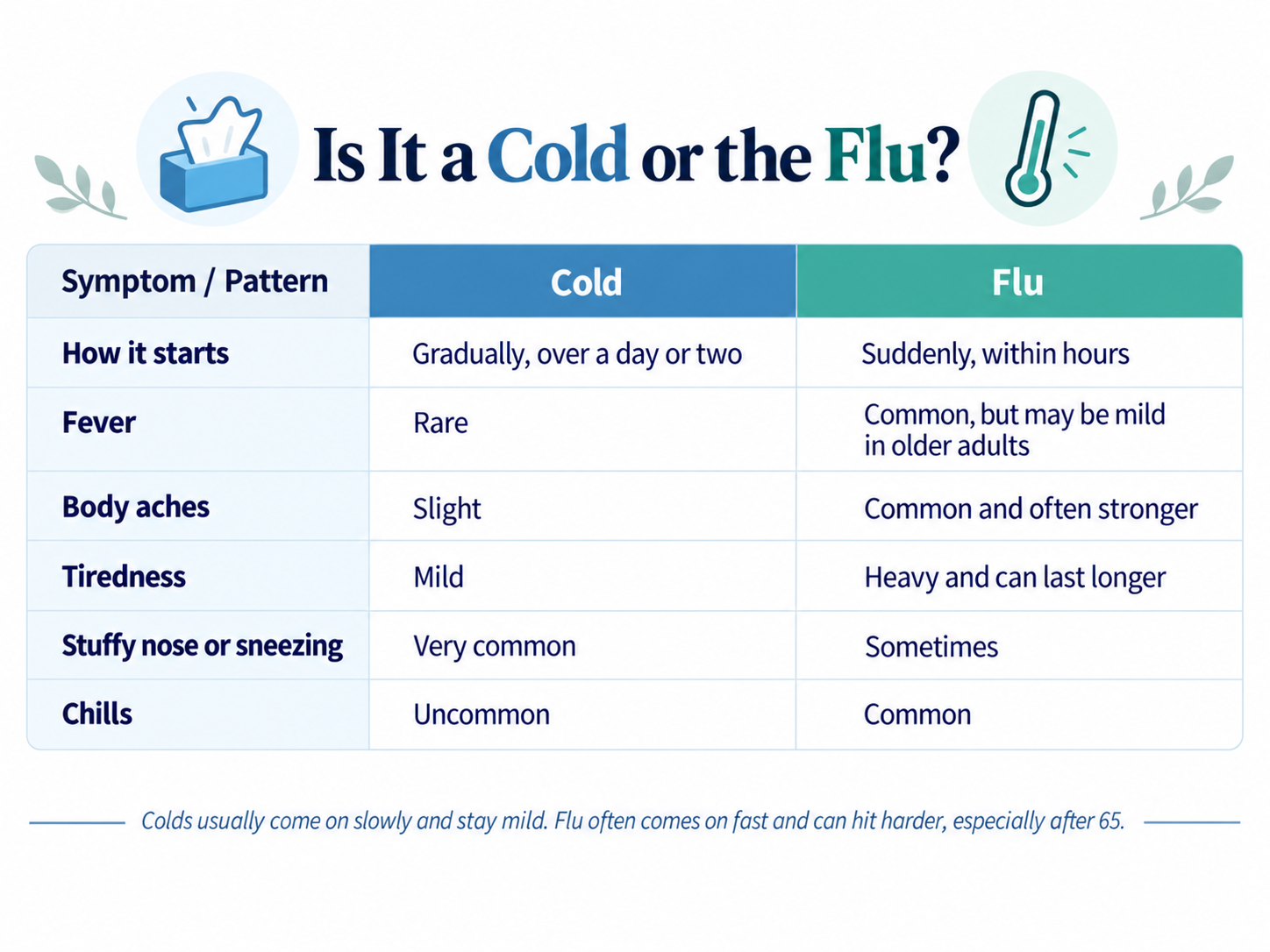
The harder part is that illness is not always obvious right away. The flu is known for coming on faster than a cold, and symptoms can include fever, chills, body aches, cough, sore throat, runny nose, headache, and tiredness. The CDC also notes that not everyone with the flu has a fever. CDC
In older adults, families may notice quieter changes first. Dad may skip lunch. Mom may sleep more than usual. A loved one may seem unsteady, confused, or just “off.” That is why a familiar caregiver can be so helpful. Someone who knows the person’s normal day may notice small changes before they become bigger concerns.
Everyday Habits That Keep Germs Out
Keeping germs out of the home does not need to be complicated. It starts with the habits people already know, but may not always have the energy to do every day. Washing hands after coming home, before meals, and after visitors is one of the simplest ways to lower risk. The CDC also recommends frequent handwashing, staying away from people who are sick, covering coughs and sneezes, and taking steps for cleaner air to help slow the spread of flu and other respiratory germs. CDC
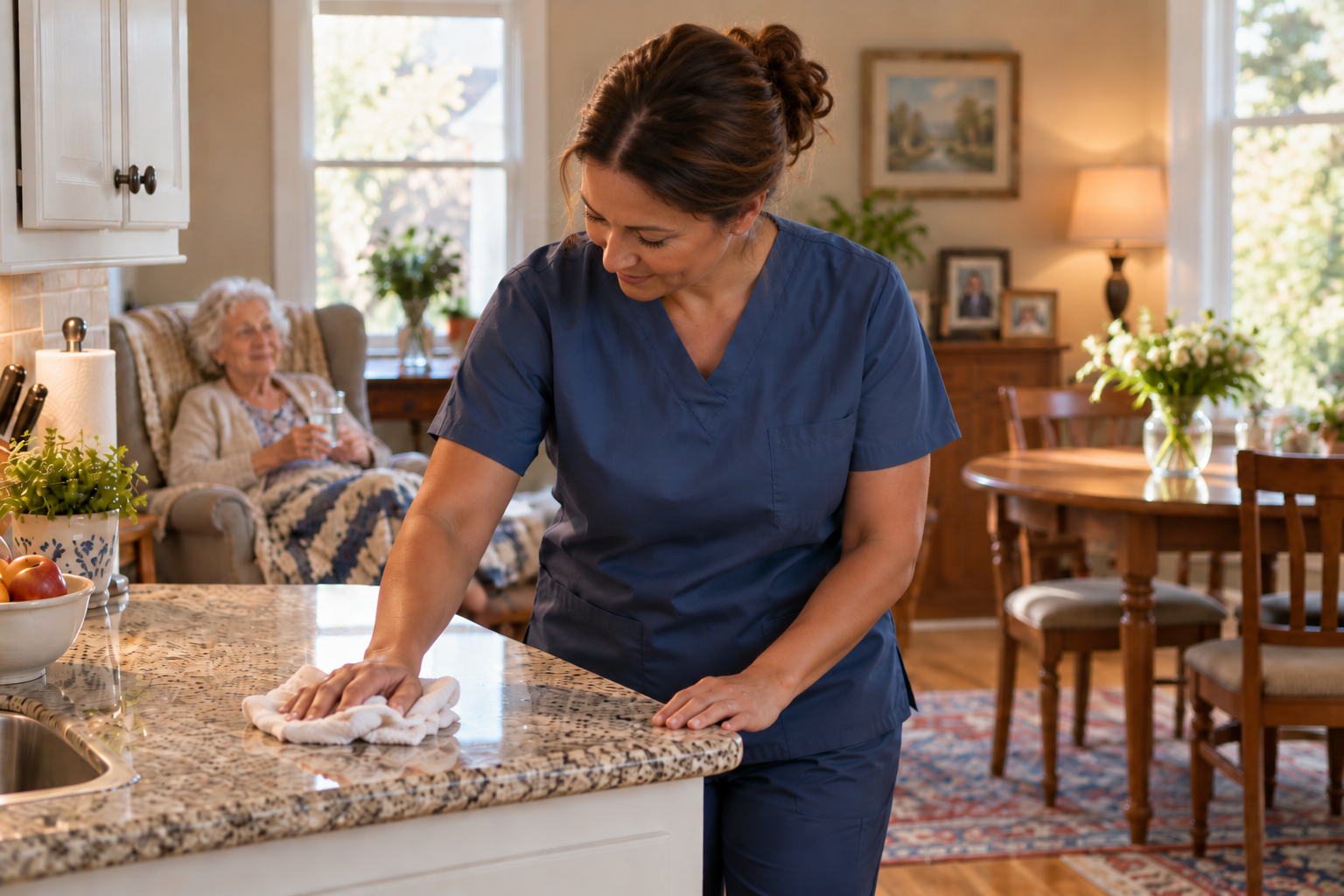
High-touch surfaces are another place to focus. A caregiver can help wipe doorknobs, light switches, remotes, phones, faucet handles, and walker handles. Fresh towels, clean bedding, and a tidy kitchen also help the home feel better during cold and flu season.
Even small steps can help when they become part of the routine. A bottle of hand sanitizer by the door can remind visitors to clean their hands. Opening a window for a few minutes can bring in fresh air. These are simple homemaking tasks, but they work best when someone keeps up with them consistently.
Food, Fluids, & Rest: The Basics That Help
When an older adult is tired, thirsty, or not eating well, it can be harder to stay strong through cold and flu season. Hydration is especially important. Older adults may not feel thirst as clearly as they used to, and dry indoor heat can make things worse. Water, warm tea, broth, and soup can all help throughout the day.
Food matters too. This does not have to mean big meals. Many seniors do better with smaller portions more often, especially if their appetite is low. Warm meals with protein, fruit, and vegetables can help the day feel steady and give the body what it needs.
Rest is part of prevention as well. A regular sleep schedule, a warm home, and a calm routine can make a difference. During weeks when illness is spreading, it may also help to have someone else run errands or pick up needed items. That way, an older adult can avoid crowded stores and waiting rooms when possible. For more simple tips, see Chanda Care’s guide to staying hydrated.
Spotting Illness Early and Knowing When to Call the Doctor
Even with good prevention, seniors can still get sick. The key is noticing changes early. Families should watch for unusual tiredness, skipping meals, new confusion, weakness, unsteadiness, fever, cough, chills, or a sudden change in how the person seems. AARP notes that confusion or dizziness can be a sign of something more serious, including dehydration or low oxygen. AARP
Call the doctor when something feels different or concerning. This includes any fever, signs of dehydration, dizziness, dark urine, confusion, worsening cough, or a sudden drop in energy. It is better to call early than to wait and wonder.
Some symptoms need emergency help. Call 911 for trouble breathing, chest pain, blue lips, severe confusion, or a sudden medical emergency. A caregiver does not diagnose or treat illness. Their role is to notice changes, report them quickly, and help the family take the next right step.
How a Chanda Care Caregiver Helps This Season
A Chanda Care caregiver can help make cold and flu season feel more manageable at home. Through homemaking services, a caregiver can help keep the kitchen clean, wipe common surfaces, change bedding, keep laundry moving, and make sure the home has the basics on hand.
Personal care and companionship also matter. A caregiver can remind a loved one to drink fluids, help with handwashing and hygiene, support a steady routine, and prepare simple meals. They can also run errands or help with prescription pickups so a senior does not have to go into crowded places as often.
For families, the biggest comfort may be having another person there who knows what normal looks like. If Mom seems more tired, if Dad is not eating, or if something feels off, the caregiver can report that change to the family. Chanda Care supports seniors and families in Springfield, Chicopee, Holyoke, Longmeadow, Ludlow, and nearby Western MA communities with personal care at home, companionship care, and support after a hospital stay.
How to Help Prevent Colds and Flu at Home
Wash hands at the right moments
After coming home, before meals, and after visitors. Twenty seconds with soap and warm water.
Wipe high-touch surfaces every day
Doorknobs, light switches, remotes, phones, and walker handles collect the most germs.
Ask sick visitors to wait
A loving “come next week” protects everyone. Offer a phone or video call instead.
Keep fluids going all day
Water, warm tea, broth, and soup. Older adults feel thirst less, so offer often.
Serve warm, simple meals
Protein, fruit, and vegetables in small portions can help support strength and routine.
Let someone else run the errands
Avoiding crowded stores and waiting rooms during peak weeks can lower the chance of getting sick.
Ask the doctor about seasonal vaccines
Guidance changes, so ask your doctor which seasonal vaccines are right for you.
A Healthier Season Starts at Home
Most of what helps older adults stay well during cold and flu season is simple. Clean hands, fresh meals, enough fluids, steady rest, and a safer home routine all add up. These habits work best when they happen every day.
If your family could use help this season, Chanda Care is here. Families across Western Massachusetts can contact Chanda Care to talk about
homemaking,
personal care, and
companionship support for an older loved one at home. Reach out through the
Contact page to start the conversation.
Services