
Elderly Nutrition: Why Do Older Adults Stop Eating?
When an older loved one starts eating less, it can be hard to know what to think. Maybe meals are being left unfinished. Maybe food in the refrigerator is going untouched. Maybe clothing seems looser, or your loved one seems more tired than usual. At first, these changes can be easy to explain away, especially if they happen slowly.
A smaller appetite can be part of aging, but that does not mean it should be ignored. Nutrition affects strength, energy, mood, healing, and the ability to stay independent. When an older adult is not eating enough, families often notice changes before they fully understand what is causing them. Learning some of the common reasons behind appetite loss can help you respond with more patience and get support before the problem becomes more serious.
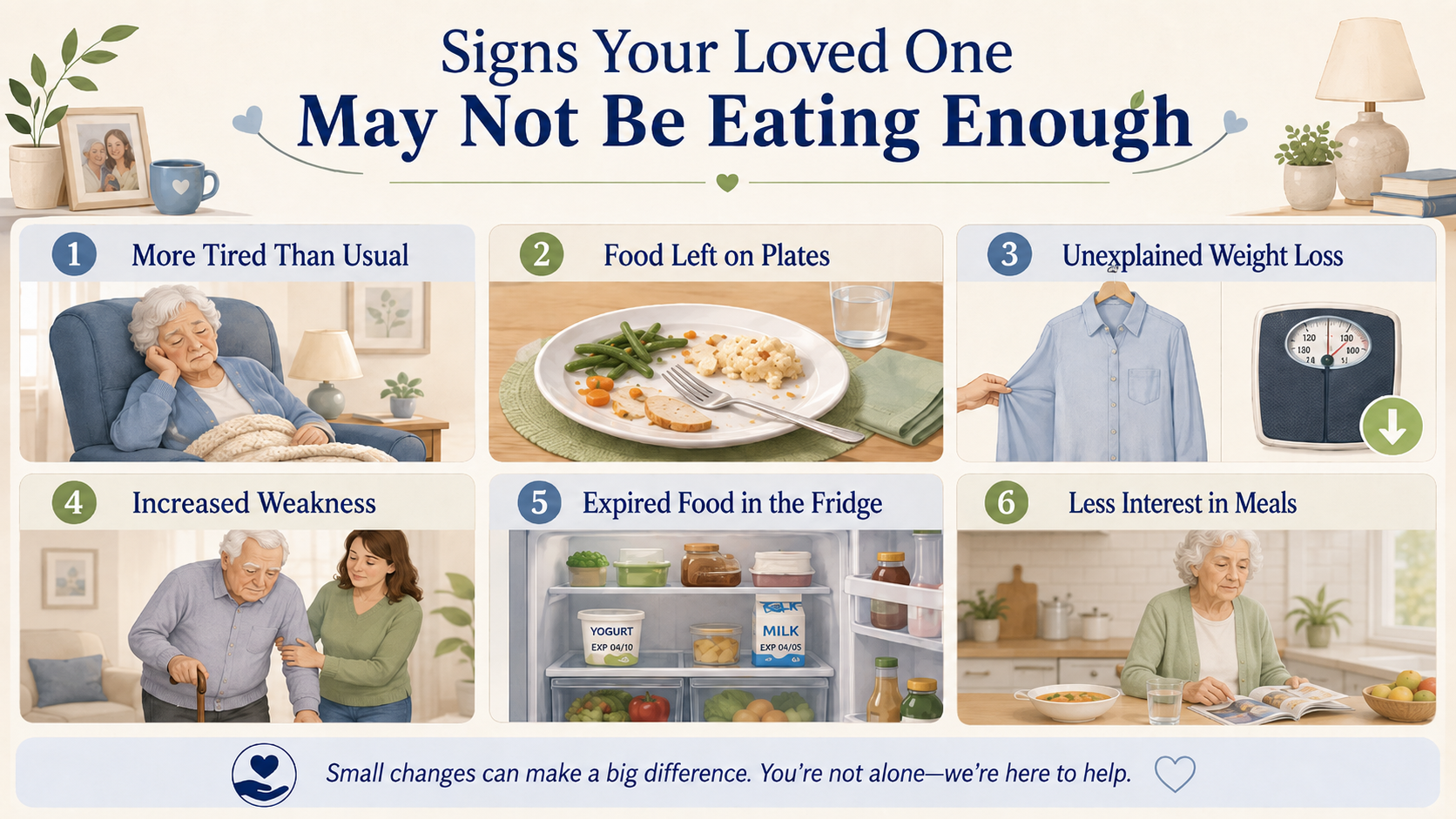
Some Common Signs to Look for
Why Appetite Changes With Age
There are several reasons an older adult may start eating less, and it is not always because they are refusing food. Many people become less active as they age, spend more time indoors, and naturally need fewer calories than they once did. Certain medications can also affect appetite or make eating feel less appealing. Health conditions, pain, fatigue, or changes in daily routines can all play a role in how much someone wants to eat.
These changes can be confusing and frustrating for families. It is hard to prepare meals with care and then watch a loved one eat only a few bites. Older adults may feel frustrated too, especially if they know their eating habits have changed but cannot explain why. Understanding that there are many possible causes can help families respond with patience and focus on finding solutions instead of placing blame.

Medical Issues Can Make Eating Difficult
Sometimes appetite changes are connected to physical discomfort. Dental pain, loose dentures, sore gums, or trouble chewing can make certain foods harder to eat. An older adult may avoid meat, raw vegetables, crusty bread, or other foods without saying why. Families may only notice that more food is being left behind.
Swallowing issues can also affect eating. If your loved one coughs during meals, avoids liquids, takes a long time to chew, or seems nervous while eating, it may be worth discussing with a healthcare professional. Eating should not feel stressful or unsafe. Even small changes in texture, portion size, or meal setup can sometimes make a big difference.
Medications are another common factor. Some prescriptions can cause nausea, dry mouth, constipation, or changes in taste. If appetite drops suddenly, or if weight loss happens quickly, it is always a good idea to speak with a doctor. Families should not feel like they have to figure out every cause on their own.
Memory Loss and Dementia Can Change Mealtimes
When someone is living with memory loss or dementia, eating can become more complicated. A person may forget they have already skipped a meal, lose track of time, or become confused by too many choices. They may sit down at the table and then not remember what to do next.
Even using utensils can become frustrating. A plate with several foods on it may feel overwhelming. A noisy room, too many instructions, or a rushed environment can make the person shut down or refuse the meal altogether. What looks like stubbornness may actually be confusion or discomfort.
Simple routines can help. Serving meals at the same times each day, reducing distractions, and offering one or two choices can make mealtimes easier. For example, asking “Would you like soup or a sandwich?” may feel much more manageable than asking, “What do you want to eat?” The goal is to make the moment feel calm, familiar, and low-pressure.
Loneliness, Grief, and Mood Can Affect Appetite
Meals are often social. Many people spend years sharing meals with family, friends, or neighbors, and eating alone every day can feel less enjoyable. Some older adults lose interest in food because mealtimes no longer feel like a meaningful part of the day.
Isolation, loneliness, and depression can all reduce appetite. A loved one may say they are not hungry, but the deeper issue may be feeling down, lacking motivation, or simply not having much to look forward to. Spending long stretches of time alone or having fewer opportunities to socialize can make meals feel like another chore rather than something enjoyable.
A lack of activity and limited time outdoors can also play a role. Older adults who rarely leave the house or spend most of the day sitting alone may experience lower energy levels, disrupted routines, and less interest in eating. Fresh air, sunlight, light exercise, and regular social interaction can help improve mood and create a more natural rhythm around meals. Even something as simple as sitting outside, taking a short walk, participating in a hobby, or attending a community activity can make a positive difference.
Companionship can help more than families realize. Sitting with someone during a meal, sharing conversation, or making lunch part of a daily routine can encourage better eating without turning the focus entirely toward food. Sometimes the presence of another person is what makes the meal feel worth starting.
Signs Families Should Watch For
Some signs of poor nutrition are obvious, while others are easy to miss. Food being left on the plate once in a while may not be a concern, but a repeated pattern can tell you something important. If your loved one is consistently eating only a few bites, skipping meals, or hiding food away, it may be time to look more closely.
Weight loss is another important sign. Loose clothing, a thinner face, or a change in how rings and watches fit can point to changes in nutrition. You may also notice your loved one seems weaker, bruises more easily, or has less energy during normal activities.
The kitchen can also give clues. Expired food piling up in the refrigerator, an empty pantry, untouched groceries, or the same leftovers sitting for days may suggest that meals are not happening as often as expected. These signs do not always mean there is one clear problem, but they do show that your loved one may need more support.
Ask Yourself: Are Eating Habits Starting to Change?
Sometimes the signs of poor nutrition are subtle and easy to overlook, especially when changes happen gradually. Taking a moment to reflect on your loved one’s daily routines can help you recognize patterns that may suggest they need additional support ask yourself these questions.
Does my loved one seem less interested in meals?
A change in interest can happen slowly. If meals used to be part of the day and now feel like something your loved one avoids, it may be worth paying attention.
Are leftovers or expired foods piling up?
Food that goes uneaten can be a sign that shopping, cooking, or remembering meals has become harder.
Have they stopped cooking like they used to?
If someone who once enjoyed cooking no longer prepares meals, the reason may be physical, emotional, or memory-related.
Is clothing starting to fit differently?
Loose clothing can be one of the first visible signs that an older adult is losing weight.
Are they more tired or weaker than usual?
Low energy, weakness, or sleeping more than usual can sometimes be connected to not eating or drinking enough.
Small Changes Can Make Meals Easier
Large meals can feel overwhelming when appetite is low. Instead of focusing on three full meals, it may help to offer smaller meals and snacks throughout the day. A few bites more often can feel less intimidating and may still provide important nutrition.
Adding more nutrition to familiar foods can also help. Healthy fats and proteins can be worked into meals without making portions much larger. Foods such as eggs, avocado, cheese, nut butters, olive oil, yogurt, and soft proteins may help increase calories and support strength.
Flavor matters too. If food tastes bland, herbs, citrus, mild spices, or aromatics can make meals more appealing without relying heavily on salt. Hydration should also be part of the conversation. Water, herbal tea, broth, and other gentle fluids between meals can help prevent dehydration without making someone feel too full before eating.
Responding Without Turning Meals Into Arguments
When a loved one refuses food, it can bring up fear and frustration. Families naturally want to protect the person they love, but pushing too hard can make mealtimes more stressful. The more pressure someone feels, the more likely they may be to resist.
A calmer approach often works better. The goal is not to win an argument over a plate of food. The goal is to reduce anxiety, keep the relationship steady, and create another chance to eat later.
- Avoid pressure. Try not to lecture, argue, or repeat statements like “You have to eat.” Even when the concern is valid, the pressure can make the person shut down.
- Acknowledge how they feel. A simple response such as “I understand you are not hungry right now” can lower tension and help your loved one feel respected.
- Offer simple choices. Too many options can be overwhelming. Try offering two choices, such as soup or a sandwich, tea or water, yogurt or toast.
- Take a short break. If the meal becomes stressful, clear the table without judgment and try again later. A different room, quieter setting, or 30-minute reset may help.
- Focus on connection. Sitting together, talking, and keeping the moment calm can make meals feel less like a task and more like part of a normal day.
Why Extra Support Can Help the Whole Family
Nutrition concerns can become emotional very quickly. Adult children may worry about weight loss, dehydration, and safety. Older adults may feel watched, corrected, or pressured. Even loving families can fall into difficult patterns around food without meaning to.
This is one reason support from a home care agency can make a meaningful difference. A caregiver is not coming into the situation with the same family history or emotional tension. They can help prepare meals, offer gentle reminders, encourage hydration, and provide companionship in a calm and respectful way.
Professional in home care can also give families a clearer picture of what is happening day to day. Caregivers can notice whether meals are being eaten, whether fluids are being accepted, and whether certain foods are easier than others. They can also encourage walks, time outdoors, and social engagement that help support both emotional well-being and healthy eating habits. That kind of observation can help families make better decisions and share more useful information with healthcare providers when needed.

The Value of Sharing Meals With Someone
Eating with another person can make meals feel more natural. For many older adults, having someone at the table changes the entire experience. A meal may become less about being told to eat and more about conversation, routine, and comfort.
Caregivers can also help with the practical side of nutrition. Grocery shopping, meal preparation, chopping food into safer bite-sized pieces, cleaning the kitchen, and keeping track of what foods are being used can all reduce stress. With the right in home care, older adults can receive support while still remaining in the comfort of their own home.
A trusted home care agency can also help families create routines that feel manageable. Sometimes the best support is not dramatic. It may be someone arriving at lunchtime, making a simple meal, sitting down to talk, taking a short walk together, or making sure the day feels a little less lonely.
Concerned About Your Loved One’s Eating Habits?
Helping someone you love maintain proper nutrition can feel overwhelming, especially when appetite changes are tied to emotions, memory, or health concerns. Families often find themselves wondering if they are overreacting, waiting too long, or saying the wrong thing. You do not have to handle these concerns alone.
Chanda Care is a compassionate home care agency providing supportive in home care for older adults who need help with meals, companionship, grocery shopping, daily routines, and more. Our caregivers help create calm, respectful support that allows seniors to remain safe and comfortable at home while giving families greater peace of mind.
If you feel your loved one may be eating less than usual, losing weight, or having difficulty getting enough nutrition, click here to call or contact Chanda Care today. We are here to help.
Services