Protecting Seniors from Summer Heat: A Western Massachusetts Caregiver's Guide
Summer heat can become dangerous quickly for older adults, especially during a humid Western Massachusetts heat wave. Heat safety for seniors matters because aging bodies do not always respond to high temperatures the same way younger bodies do.
The good news is that a few simple steps can help seniors stay safer and more comfortable at home. With hydration, cooling routines, medication awareness, and regular check-ins, families can reduce heat-related risks before they become emergencies.
Why Summer Heat Hits Seniors Harder
Older adults are more vulnerable to heat because the body becomes less efficient at regulating temperature with age. Sweating may not cool the body as well, circulation can change, and it may take longer to recover once the body starts overheating.
Thirst can also become less noticeable. A senior may not feel thirsty until they are already becoming dehydrated, which is why waiting for them to ask for water is not always enough. Chronic conditions such as heart disease, diabetes, kidney issues, and breathing problems can also make hot weather harder on the body.
This is why hot summer days need a little extra planning. A senior may seem fine in the morning, but by afternoon, a warm house, low fluid intake, or too much time in the sun can quickly lead to discomfort or serious heat-related illness.
Warning Signs of Heat Exhaustion and Heat Stroke
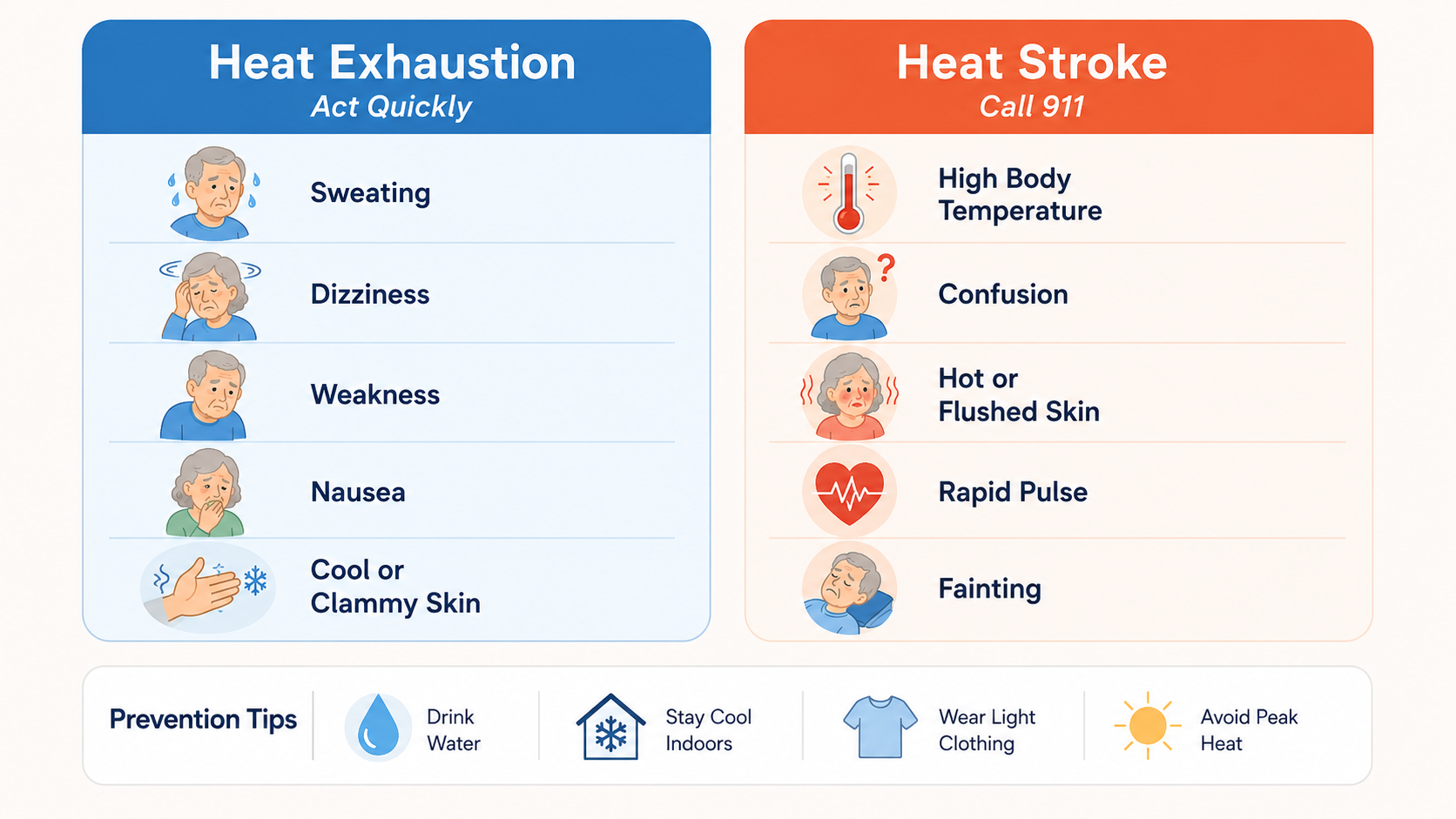
Heat exhaustion can happen when the body is struggling to cool itself. It is important to act early by moving the person to a cooler space, offering fluids if they can safely drink, and watching symptoms closely.
Heat exhaustion warning signs may include:
- Heavy sweating
- Weakness or unusual tiredness
- Dizziness or lightheadedness
- Nausea
- Headache
- Cool, pale, or clammy skin
- Muscle cramps
Heat stroke is a medical emergency. If you believe someone may be having heat stroke, call 911 right away. Do not wait to see if symptoms improve.
Heat stroke warning signs may include:
- Body temperature around 103°F or higher
- Hot, dry, red, or flushed skin
- Confusion or sudden behavior changes
- Rapid pulse
- Fainting
- Trouble speaking clearly
- Loss of consciousness
How Medications Increase Heat Risk
Some medications can make heat harder for older adults to manage. Diuretics, some blood pressure medications, and certain psychiatric medications may affect hydration, sweating, or the way the body responds to high temperatures.
Families do not need to guess or make changes on their own. A doctor or pharmacist can explain whether a loved one’s medications increase heat sensitivity and what precautions make sense during summer weather.
This is especially helpful before a heat wave. If your loved one takes several medications, has a chronic condition, or has had dehydration concerns in the past, a quick call to a medical professional can give your family clearer guidance.
Simple Ways to Stay Cool & Hydrated
Small habits can make a big difference during hot weather. Encourage fluids throughout the day, not only when your loved one says they are thirsty. Water is important, but hydrating foods can also help, including fruit, yogurt, soups, smoothies, and water-rich snacks.
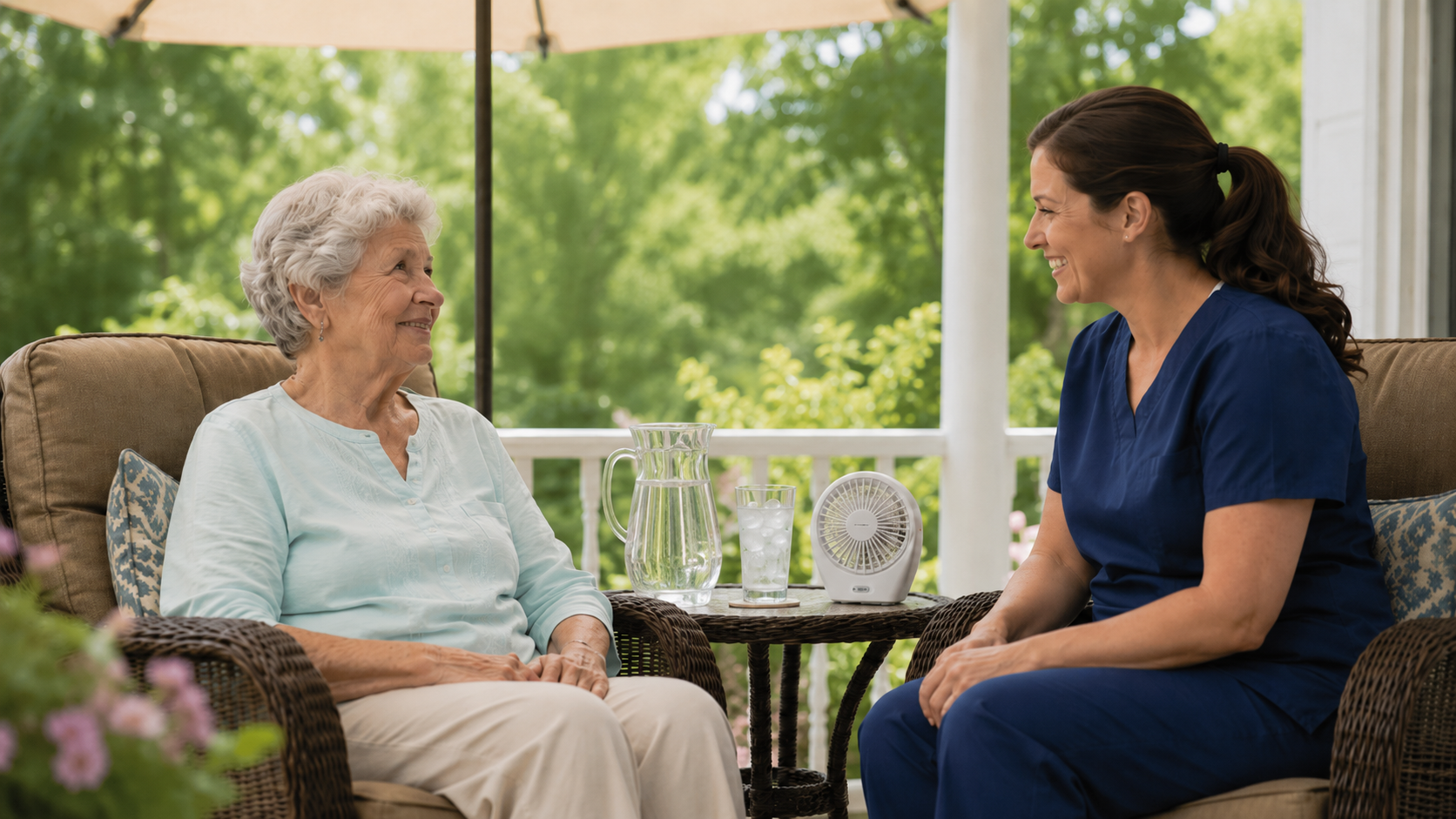
Families can also plan daily routines around the heat. During the hottest hours of the day, usually late morning through the afternoon, it is best to limit the amount of time spent outdoors. If your loved one enjoys sitting outside, choose a shaded spot such as a covered porch, pergola, patio umbrella, or another cool area away from direct sun.
Helpful summer safety steps include:
- Keep water nearby throughout the day
- Offer small drinks often instead of one large amount at once
- Serve hydrating foods like melon, berries, oranges, cucumbers, and soups
- Use lightweight, breathable clothing
- Keep blinds or curtains closed during the hottest part of the day
- Use air conditioning when available
- Add fans to help circulate cool air
- Choose shaded areas for any longer outdoor sitting
- Have small fans for outdoors
- Encourage cool showers, cool washcloths, or time in a cooler room
For more year-round hydration ideas, Chanda Care’s guide to staying hydrated offers practical tips families can use at home.
Staying Cool in Western MA: Local Resources
During heat advisories, many Western Massachusetts towns share information about cooling centers, senior centers, and community resources. Families can check local town websites or contact their Council on Aging to see what options are available during extreme heat.
Communities such as Springfield, Chicopee, Holyoke, Agawam, Westfield, and surrounding towns may have local updates during hot weather. Senior centers can also be a helpful resource for families who are looking for safe daytime spaces, wellness checks, or seasonal safety information.
This is especially important for seniors who live alone, do not have reliable air conditioning, or have limited transportation. A little planning before the hottest days arrive can help families know where to turn if the home becomes too warm.
How Caregivers Can Help in The Summer
An in-home caregiver can provide steady support when families cannot be there throughout the day. Caregivers can encourage fluids, prepare light meals, help with cooling routines, and watch for changes that may point to heat exhaustion or dehydration.
Support can also reduce the need for a senior to go out during the hottest part of the day. A caregiver may help with errands, reminders, safe movement around the home, and daily routines that become harder during extreme heat.
Chanda Care provides personal care at home for seniors who need help with daily activities and companionship care for those who benefit from check-ins, conversation, and reassuring support. During summer, that consistent presence can give families more peace of mind.
Helping Seniors Stay Safe Through the Summer
Summer can still be a comfortable and enjoyable season for older adults, but hot days require a little more care. Watching for warning signs, encouraging fluids, keeping the home cool, and planning around peak heat can help protect your loved one.
Chanda Care supports seniors and families throughout Western Massachusetts with compassionate in-home care. If your loved one could use help staying safe, hydrated, and comfortable at home this summer, contact Chanda Care to learn more about available support.
Summer Heat Safety Reminders for Families
Your loved one is drinking less than usual
Older adults may not feel thirsty even when their body needs fluids. Encourage small drinks throughout the day and watch for signs such as dry mouth, dizziness, dark urine, or unusual tiredness.
The home feels warm by late morning
If the house is already heating up before noon, take steps early. Close blinds, turn on fans, use air conditioning when available, and help your loved one stay in the coolest part of the home.
They seem confused, weak, or unusually tired
Sudden confusion, weakness, or extreme fatigue should be taken seriously during hot weather. These changes can be signs that the body is under stress and may need quick attention.
Outdoor plans should be timed around the heat
Grocery trips, appointments, walks, and patio time are safer when planned for the morning or evening. If your loved one wants to spend time outside during the day, help them stay in the shade under a covered porch, pergola, patio umbrella, or another protected area. During heat waves, avoid long periods in direct sun.
Services