
Medication Reminders for Seniors: How In-Home Caregivers Help Loved Ones Stay on Schedule
Many older adults take several prescriptions, vitamins, or over-the-counter medications on different schedules. For families, it can be stressful to wonder if Mom forgot a dose, took something twice, or missed a refill.
Medication reminders for seniors can make daily routines feel more manageable, especially when a loved one wants to remain safely at home in Western MA.
With steady reminders, simple organization, and the right support, staying on schedule does not have to feel overwhelming.
Why Medication Management Gets Harder With Age
Medication management at home for elderly loved ones can become more difficult for several reasons. Many seniors take multiple prescriptions, and each one may come with different instructions. One pill might be taken in the morning, another with food, and another before bed.
Memory changes can also make timing harder. A senior may remember taking medication earlier, but not remember if it was today or yesterday. They may also feel unsure when a medication routine changes after a doctor visit, hospital stay, or new prescription.
Even clear instructions can become confusing when there are several bottles, refill dates, and schedules to keep track of. This is why medication reminders for seniors are so helpful. They give older adults a steady routine without making them feel rushed or pressured.
The Risks of Missing or Mistimed Medications
Missed or mistimed medications can create real concerns for older adults. A skipped dose may affect how well a medication works, while taking a dose at the wrong time can throw off the rest of the day’s schedule.
Accidental double doses are another risk. This can happen when a senior forgets they already took something and takes it again later. Running out of refills can also become a problem, especially if a family member does not realize the medication is almost gone.
These issues can affect a senior’s health and may lead to avoidable calls to the doctor, urgent care visits, or hospital stays. The goal is not to scare families, but to show why a consistent routine matters. When medication timing becomes less reliable, it may be a sign that extra support at home would help.
Caregiver Medication Support
It is important for families to understand what non-medical in-home caregivers can and cannot do with medications. Chanda Care caregivers can provide reminders and routine support. That can include prompting a senior at the right time, helping keep the medication area organized, noticing missed doses, and sharing concerns with the family.
A caregiver can also help a senior stay aware of refill needs. For example, they may notice when a bottle is running low, remind the family, or help keep a simple refill checklist visible. These small steps can prevent last-minute stress and help families stay better informed.
There are also clear limits. Medication decisions should be handled by licensed medical professionals such as nurses, doctors, and pharmacists. Caregivers do not adjust doses, make medication changes, or decide when a medication should be started, stopped, or changed. If there is confusion about instructions, side effects, or timing, the family should contact the senior’s doctor or pharmacist.
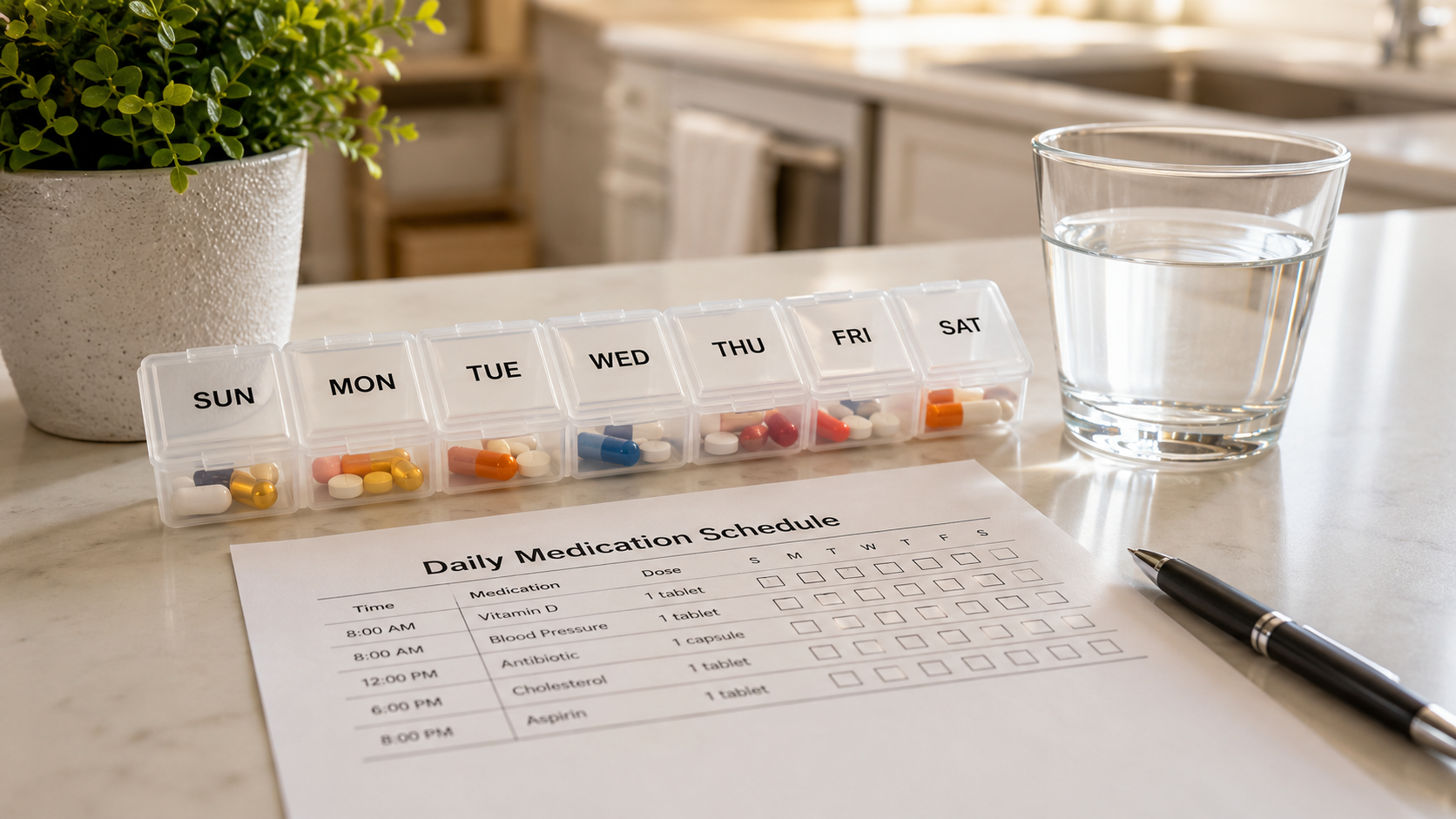
How In-Home Caregivers Support a Medication Routine
An in-home caregiver can help make medication reminders feel like a normal part of the day. Instead of a family member needing to call over and over, the reminder can happen during a morning routine, mealtime, or evening check-in.
Caregivers can also keep the surrounding routine steady. They may remind a senior to drink water, eat a meal or snack when needed, and keep the medication area clean and easy to use. A simple, familiar setup can make a big difference for helping seniors take medications on time.
This support can feel more comfortable when it comes from someone the senior knows and trusts. Through companionship care, a caregiver can build a warm relationship that makes reminders feel supportive, not nagging. That steady presence can also help families notice patterns, such as repeated missed doses, confusion, or changes in daily habits.
Simple Systems That Make Staying on Schedule Easier
Families can use simple systems to make a medication routine easier to follow between caregiver visits. The best system is usually the one the senior can understand quickly and use every day.
A weekly pill organizer can help make each day’s medications easier to see. A written schedule on the refrigerator or kitchen counter can also help, especially when it uses clear times like morning, lunch, dinner, and bedtime.
Helpful systems may include:
- A weekly pill organizer
- A written medication schedule in a visible spot
- Phone, clock, or smart speaker reminders
- Refilling prescriptions through one pharmacy when possible
- Keeping an up-to-date medication list for doctor visits
- Writing refill dates on a calendar
- Asking the pharmacy about refill syncing if available
These systems do not need to be complicated. In many cases, a clean counter space, a simple list, and a steady reminder are enough to bring more order to the day.

When to Involve a Nurse, Doctor, or Pharmacist
Some medication concerns need input from a licensed medical professional. Families should reach out to a doctor, nurse, or pharmacist if their loved one is confused about what to take, has frequent missed doses, reports side effects, or has medication instructions that are hard to understand.
A medical professional should also be involved when a senior’s needs go beyond reminders and organization. This includes questions about dosage changes, possible interactions, new symptoms, or any care that requires clinical training.
It is always better to ask for clarification than to guess. Caregivers can help families notice concerns and keep routines organized, but medical guidance should come from the appropriate professional.
Support for Medication Reminders at Home
Medication routines can become harder with age, but families do not have to manage everything alone. With the right reminders, simple organization, and regular check-ins, many seniors can feel more confident staying on schedule at home.
Chanda Care provides personal care at home and companionship support for seniors and families throughout Western MA. If you have noticed signs you may need extra support, such as missed medications, confusion with routines, or growing caregiver stress, in-home care may help.
To talk with Chanda Care about medication reminders, daily routine support, or care for a loved one at home, contact Chanda Care today.
Services